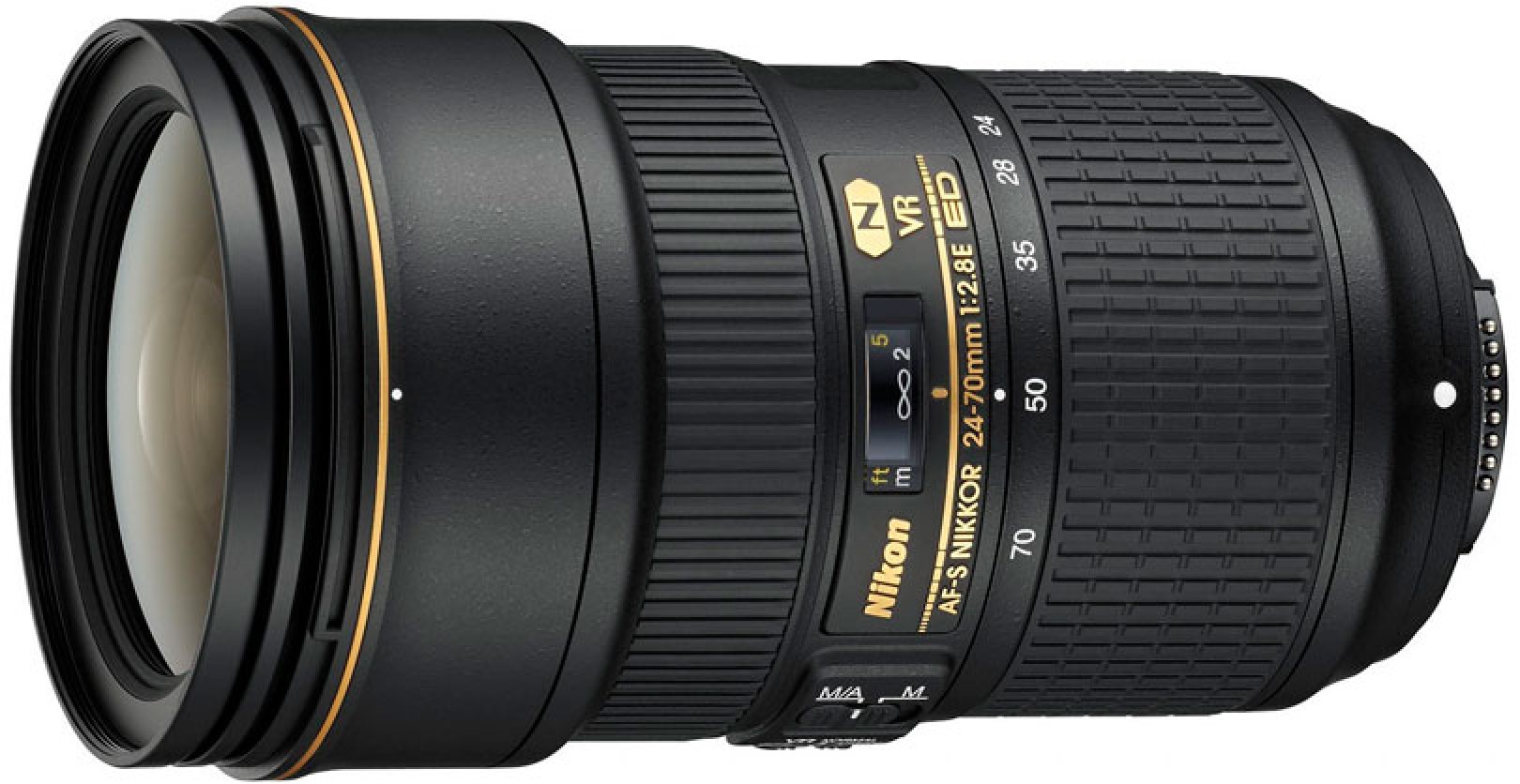
This lens offers exceptional versatility with its wide-angle to short telephoto range and a consistent f/2.8 aperture for superior low-light performance. The Vibration Reduction system ensures sharper images by minimizing camera shake. Quick and silent autofocus is perfect for photos and videos, while manual focus override provides precision. Enhanced coatings improve image quality by reducing flare and maintaining colour accuracy. The lens is durable, with fluorine coatings protecting against dust and moisture.
Features
The classic standard zoom now featuring Vibration Reduction image stabilization, Nikon's AF-S NIKKOR 24-70mm f/2.8E ED VR Lens is a truly versatile wide-angle to short telephoto lens characterized by its constant f/2.8 maximum aperture and electromagnetic aperture mechanism. A revised optical design incorporates a unique aspherical extra-low dispersion element, in addition to three aspherical, two extra-low dispersion, and one high refractive index elements, to help reduce chromatic aberrations and distortions throughout the zoom range in order to achieve high image sharpness and clarity. The Nano Crystal and Super Integrated Coatings further benefit image quality by reducing lens flare for improved contrast and color accuracy and fluorine coatings on the front and rear elements protect against dust, moisture, and smudging.
Complementing the imaging capabilities
A Silent Wave Motor AF system produces quick, quiet focusing performance that suits both stills shooting and movie recording which can instantly be manually overridden by simply turning the manual focus ring. Further contributing to photographing in fast-paced situations and difficult lighting, VR (Vibration Reduction) image stabilization compensates for the effects of camera shake by up to four shutter speed stops. Additionally, an electromagnetic aperture mechanism is integrated into the lens design to provide greater exposure control stability that is especially beneficial when working with faster continuous shooting rates.






 In Stock
In our warehouse
Available for home delivery
Out of stock
In Stock
In our warehouse
Available for home delivery
Out of stock