Features
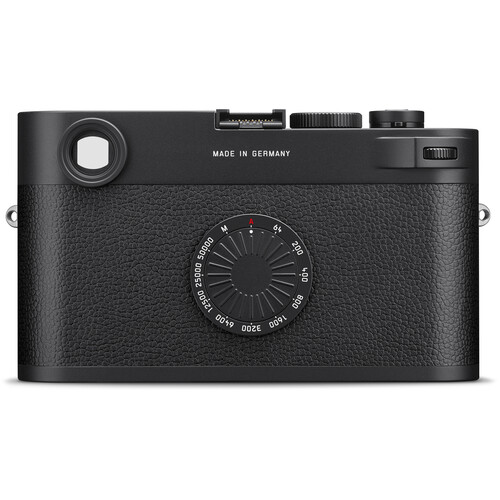
Leica's history stretches over a century and has its roots deep in the legacy of film. While today film is no longer the standard choice for photographers, many still appreciate the methology and approach demanded by the limitations of film. Bringing that analog soul to the digital era is the Leica M11-D. This model retains the digital technology at the heart of the M11 and makes a bold choice-removing the rear display. Replacing the screen with a simple mechanical ISO dial, the M11-D provides the most true feeling analog experience while still capturing advanced digital imagery.
Leica M11-D
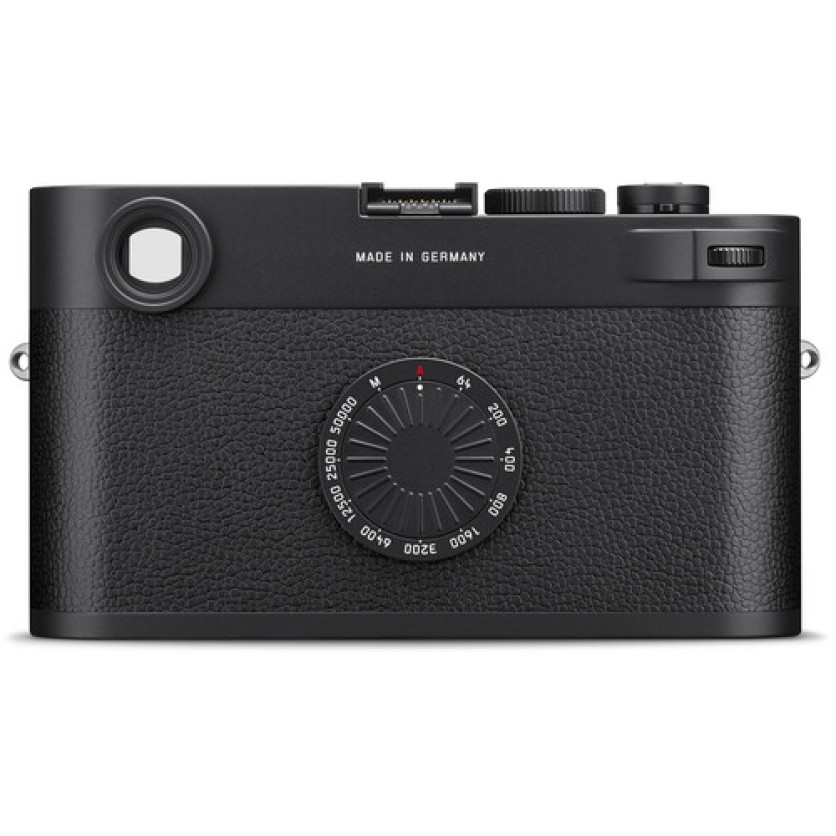
Iconic Design with No Screen
Leica has consistently developed alternative models of their cameras with tweaks that make them more appealing to different types of photographers-sometimes by eliminating features. The M11-D is one of Leica's most distinct variations as it eliminates the rear LCD screen in favor of a simple ISO dial. It also follows in the trends set by the M11-P with an iconic design that eschews the red dot logo for a more discrete profile. Some of the key design choices of the M11-D include:
- Rear screen has been replaced with mechanical ISO dial.
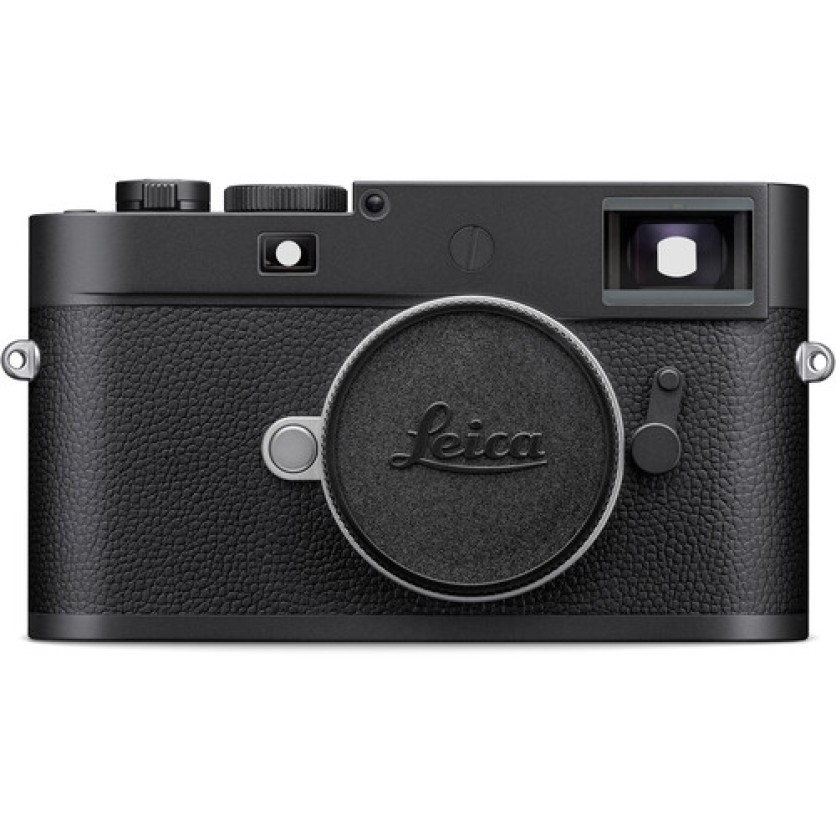
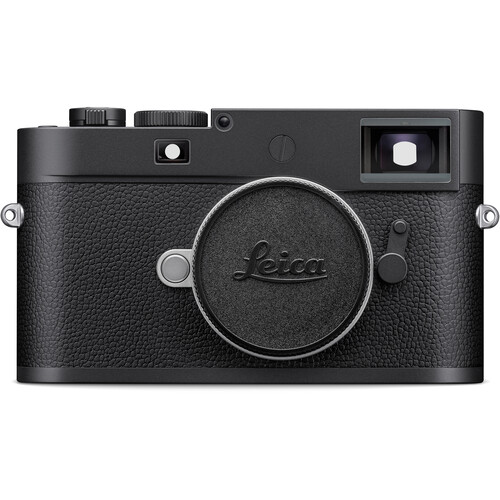
- Unobstrusive no logo design and dark chrome viewfinder.
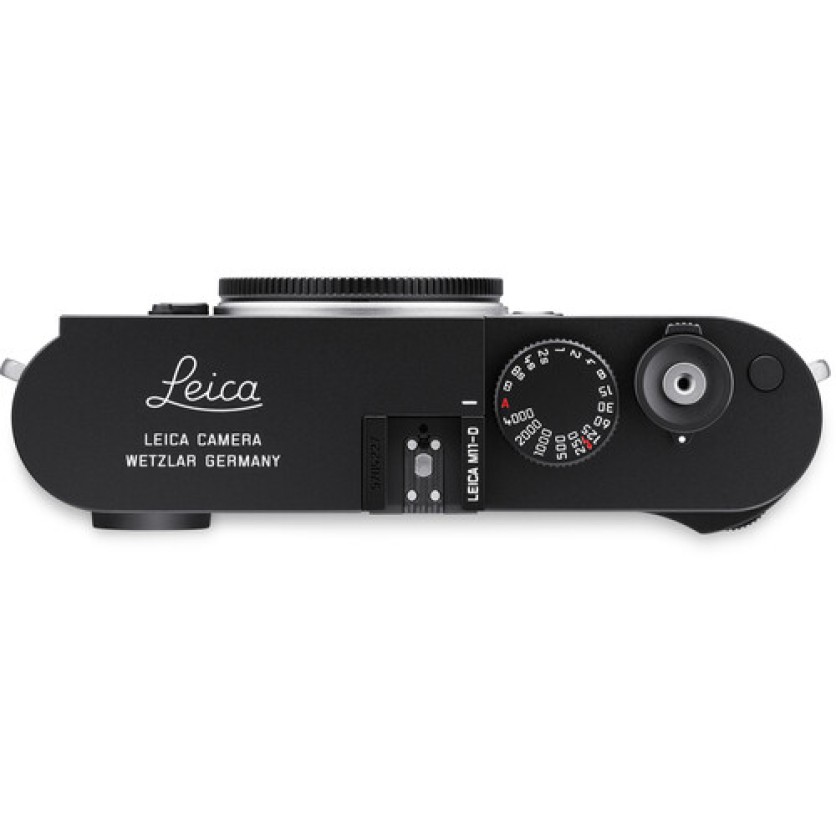
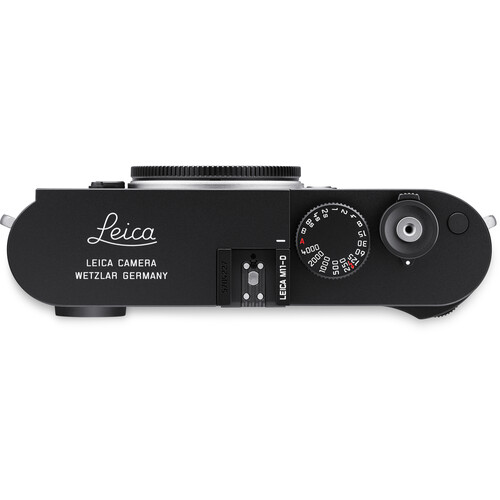
- Engraved Leica script on the top cover plate.
- Internal storage to 256GB.
Leica Content Credentials with Content Authenticity Initiative Technology
The M11-D features Content Authenticity Initiative (CAI) technology. The Content Authenticity Initiative (CAI) is a collaborative effort initiated by Adobe in partnership with various other organizations, including The New York Times and Leica. Its primary goal is to develop a standard for digital content attribution.
In the M11-D, this technology shows up as Leica Content Credentials. By using a secure processing chip, the camera will encrypt image metadata at the point of capture. This information can then be independently verified and even appended to when using compatible applications, such as Adobe Photoshop. Viewers can then verify the provenance of the image and confirm the veracity of the image. The aim is to give viewers more confidence in the images they are looking at and provide creators with another way to maintain credits.
Advanced Imaging Technology
60MP Full-Frame BSI CMOS Sensor
Featuring the high-resolution design seen in the M11, the M11-D's 60MP full-frame CMOS sensor also features a back-illuminated (BSI) design that offers improved noise performance and faster readout speeds. The higher resolution suits more detail-oriented applications, like landscape and architectural subjects, and the noise-reduction benefits of the BSI design improves clarity and color accuracy when working in low-light conditions with higher ISOs.
The sensor's physical design also includes an updated ultra-thin dual-layer filter glass, which absorbs UV and IR wavelengths for greater clarity and more accurate rendering from the M lenses.
Triple Resolution Technology
Besides the 60MP resolution and BSI design, another first for M cameras is Triple Resolution Technology. This unique pixel binning process allows photographers to select 60MP, 36MP, or 18MP output, with each resolution making use of the full sensor area and providing rich 14-bit color. By pixel binning, rather than cropping, the lower resolutions have improved dynamic range and noise levels:
- Leica M11 Triple Resolution Technology
- 60MP: 14 stops of dynamic range, highest resolution
- 36MP: 15 stops of dynamic range, best balance of resolution and noise
- 18MP: 15 stops of dynamic range, lowest noise levels
Maestro III Image Processor
The Maestro III processor contributes to the faster processing and Triple Resolution Technology of the M11-D, as well as helps achieve a wider sensitivity range than in past M cameras. An ISO 64-50000 range is now available for greater detail, quality, and natural color rendering at lower ISO settings. The Maestro III also enables continuous shooting at up to 4.5 fps and facilitates fast file saving for an intuitive shooting experience.
Imaging Improvements
The M11-D is still a photo-only camera that prioritizes manual operation, but a variety of improvements and functional updates have been made to make the M11-D the most contemporary M camera yet:
- An electronic shutter function now permits shooting at shutter speeds up to 1/16,000 sec, which is perfect for working with faster f/0.95 lenses without the need for ND filters. A mechanical shutter still offers shutter speed support up to 1/4000 sec and flash sync at 1/180 sec.
- Two digital zoom steps can simulate working with longer focal length lenses by cropping into the image slightly, at 1.3x (39MP) and 1.8x (18MP) levels. These are reversible crops when recording a DNG or permanent crops if shooting straight to JPG.
- Multi-field exposure metering is available in addition to spot and center-weighted average, which helps reduce the need to meter and then re-compose before shooting.
- Long Exposure Noise Reduction helps to reduce the appearance of noise but can also be disabled for faster saving times.
Traditional Rangefinder Design
The M11-D features a timeless design inspired by the original M camera, the M3, from 1954. This classic and recognizable form prioritizes intuitive handling and shooting along with a sleek and minimalist appearance. The M11-D is particular captures the analog mindset by eschewing the rear LCD found on modern digital cameras and replacing it with an ISO dial.
Optical Viewfinder
The optical viewfinder is a large and bright 0.73x-magnification rangefinder with automatic parallax compensation and bright-line frame lines, which are set to match the image sensor size at a focusing distance of 6.6'.
On the front of the camera, a viewfinder frame selector can be used to manually change the apparent image field to help visualize the scene with varying focal lengths; options are available in 35mm/135mm, 28mm/90mm, and 50mm/75mm focal length pairs.
Updated Body Design and Handling
Despite the M11-D's similarity to past M cameras, it features a variety of notable changes to its body design:
- This black finish version of the M11 features an aluminum top plate with a scratch-resistant coating. This design is about 20% lighter than the silver-chrome M11 models, which feature a brass top plate, and weighs 1.2 lb with the battery installed.
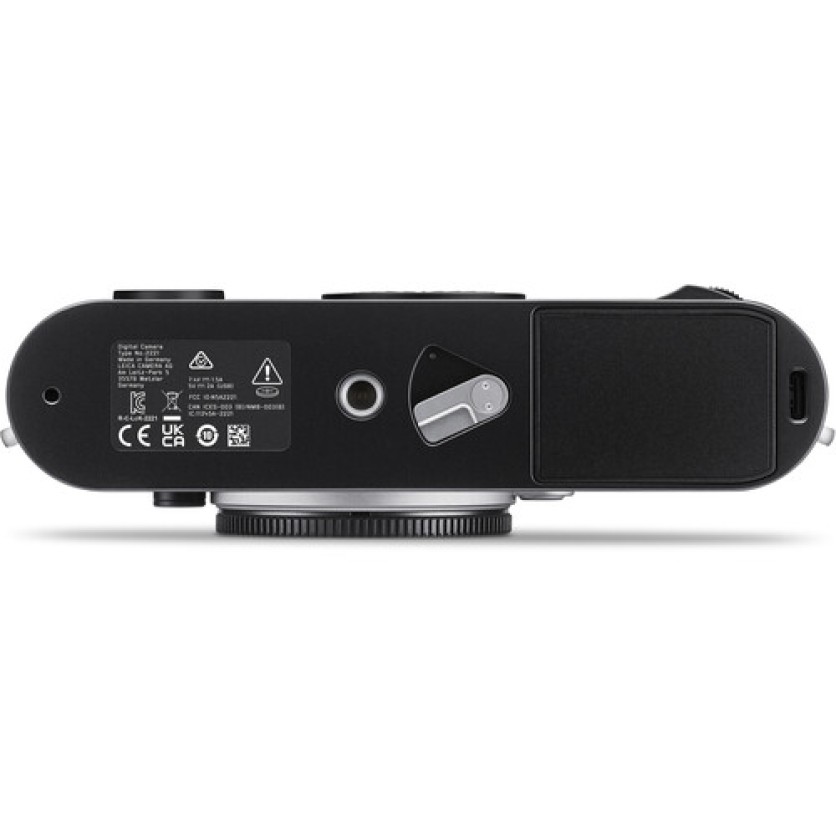
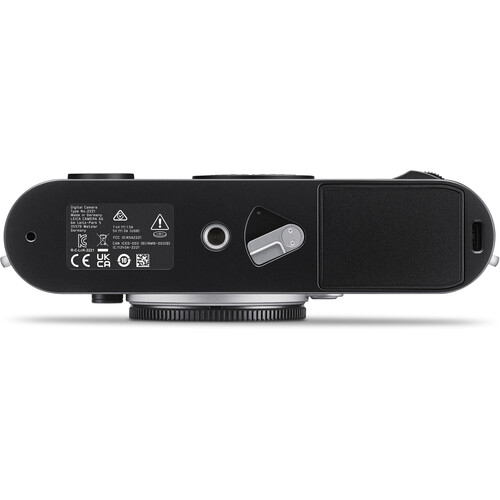
- The M11 line is the first M camera to not feature a removable baseplate; instead, the M11-D borrows a design from the Q and SL systems and uses a new BP-SCL7 battery that is inserted directly into the base of the camera body.
- BP-SCL7 lithium-ion battery has 64% more capacity than the previous generation's battery and is CIPA-rated for 700 shots per charge. However, if working with the optical viewfinder only, approximately 1700 shots per charge is possible.
- Design also incorporates a single UHS-II SD memory card slot within the battery compartment.
- Built-in 256GB memory, increased from 64GB in the base M11, means you can forgo using a memory card altogether, or use the internal memory in conjunction with an SD card to simulate having dual card slots for splitting file types or for overflow storage. Image files can also be transferred from the internal memory to the SD card for easy backup.
- USB type-C port on the base permits in-camera battery charging and file transferring.
Wired and Wireless Connectivity
The USB type-C port can be used in conjunction with the included FOTOS Cable, which allows direct attachment to an Apple iPhone via the Leica FOTOS app for easy file management and sharing.
Wi-Fi and Bluetooth can also be used for wireless connecting the camera to an iOS device using the FOTOS app.
In-app geotagging is possible along with the ability to select favorites and apply ratings to images via your mobile device.




 In Stock
In our warehouse
Available for home delivery
Out of stock
In Stock
In our warehouse
Available for home delivery
Out of stock