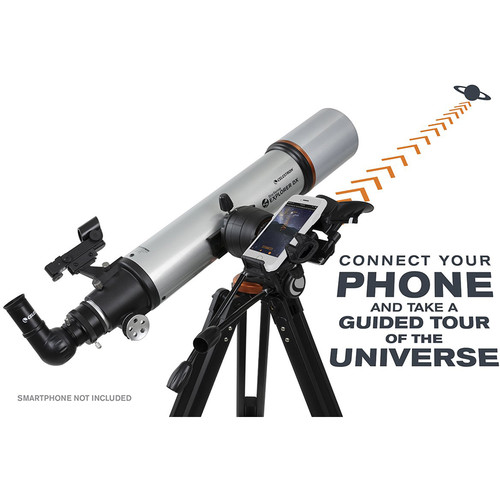
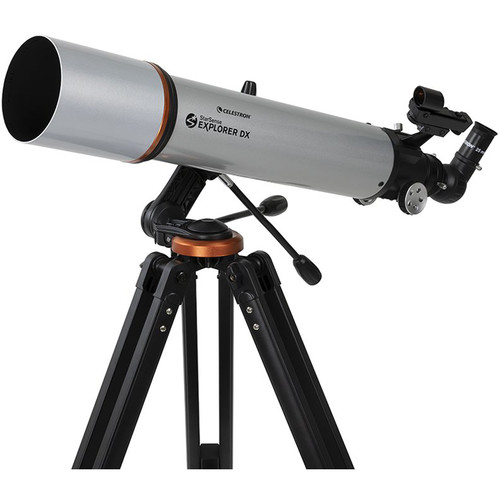
Explore the night sky effortlessly by docking your smartphone into the telescope's holder and using the StarSense Explorer app, which guides you to celestial objects. The app doesn't require a cell signal, so it's perfect for remote locations. The 102mm lens offers clear views of the moon, planets, and deep-sky objects, while the adjustable tripod and slow-motion controls ensure easy viewing and tracking. Accessories included provide high and low magnifications for immediate use.
Features
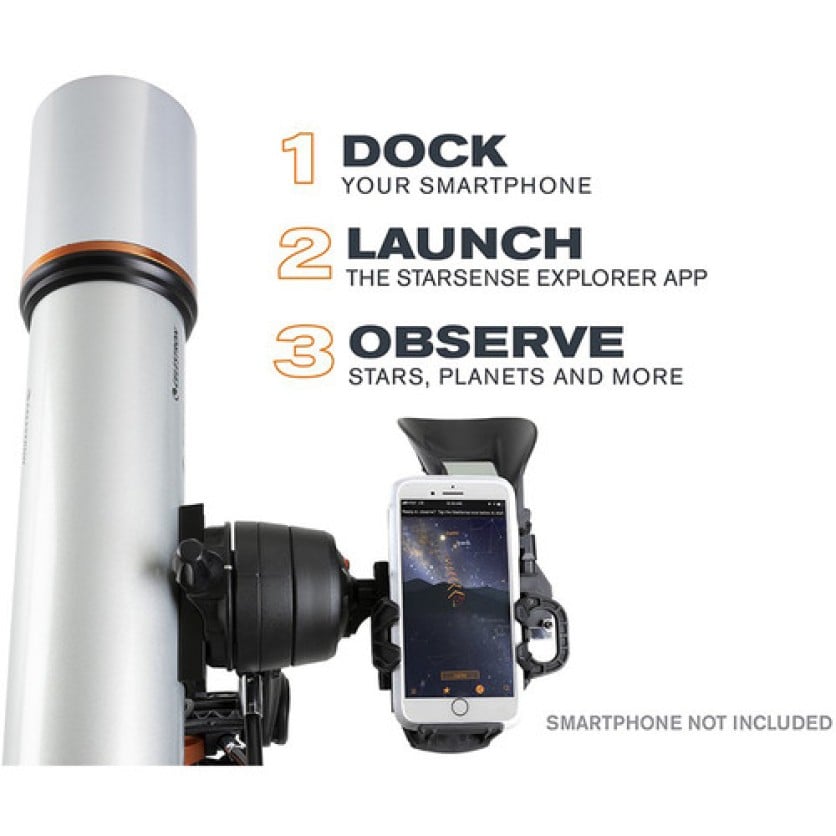
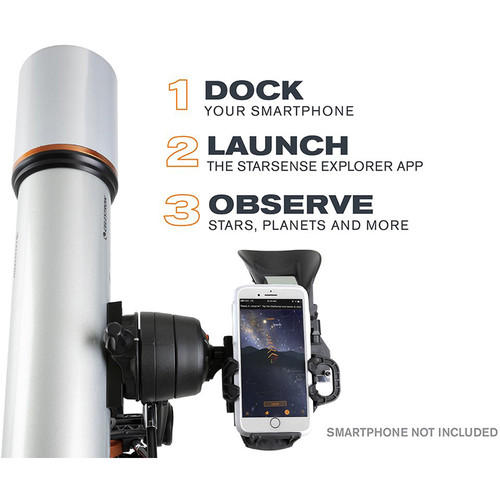
With the Celestron StarSense Explorer DX 102AZ 102mm f/6.5 AZ Refractor Telescope, exploring the wonders of the universe is as simple as 1-2-3:
Dock your smartphone
Launch the StarSense Explorer smartphone app
Observe the moon, planets, stars, and more
Innovative Integration
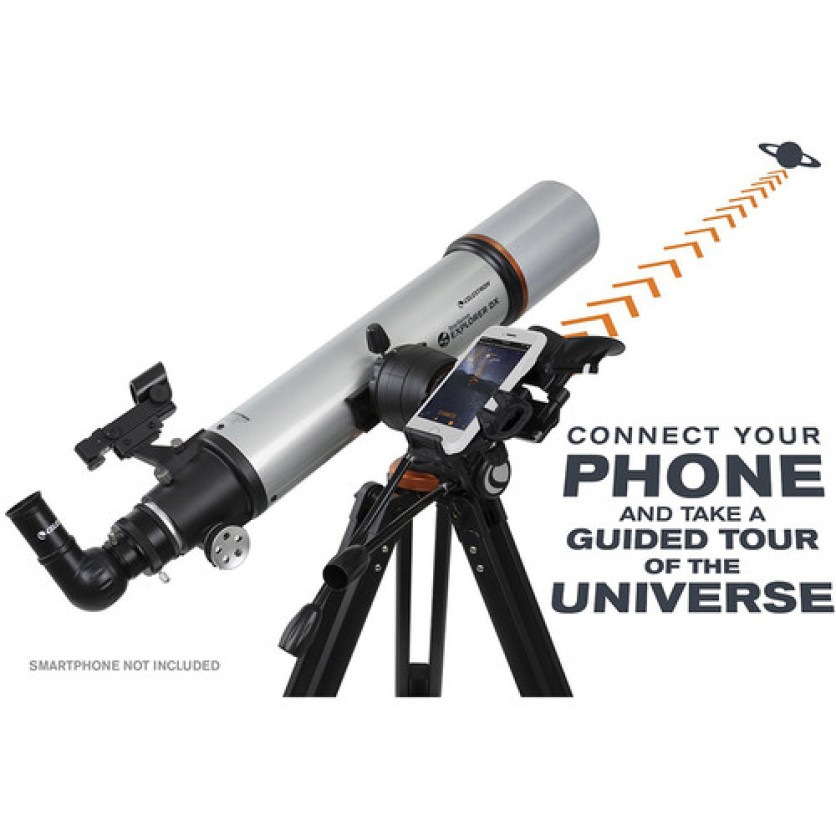
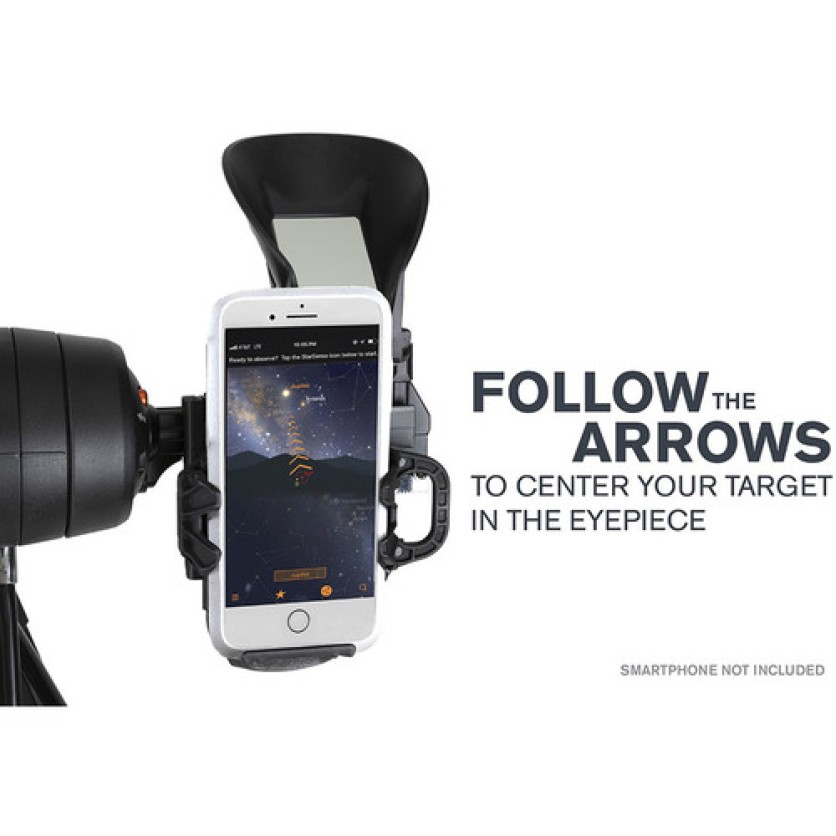
This innovative integration of smartphone and telescope offers beginner astronomers a fast and (more importantly) easy way to discover what's up in the night sky and where to view it. Utilizing similar alignment technology that satellites use when they move out of position, the StarSense Explorer app uses your phone's camera to stream a constant series of images and compare them to an internal database to identify the starfield and determine its location. This "Lost in Space Algorithm" is more precise than typical astronomy apps and does not require a cell signal to work—so you can use it even when you're far off the grid. A holder on the mount, aligned with the telescope, ensures that where the phone is pointed is the same as where the scope is, so that when you follow the onscreen directions to find the object of interest and you look through the eyepiece, it will be there.
Optical Performance
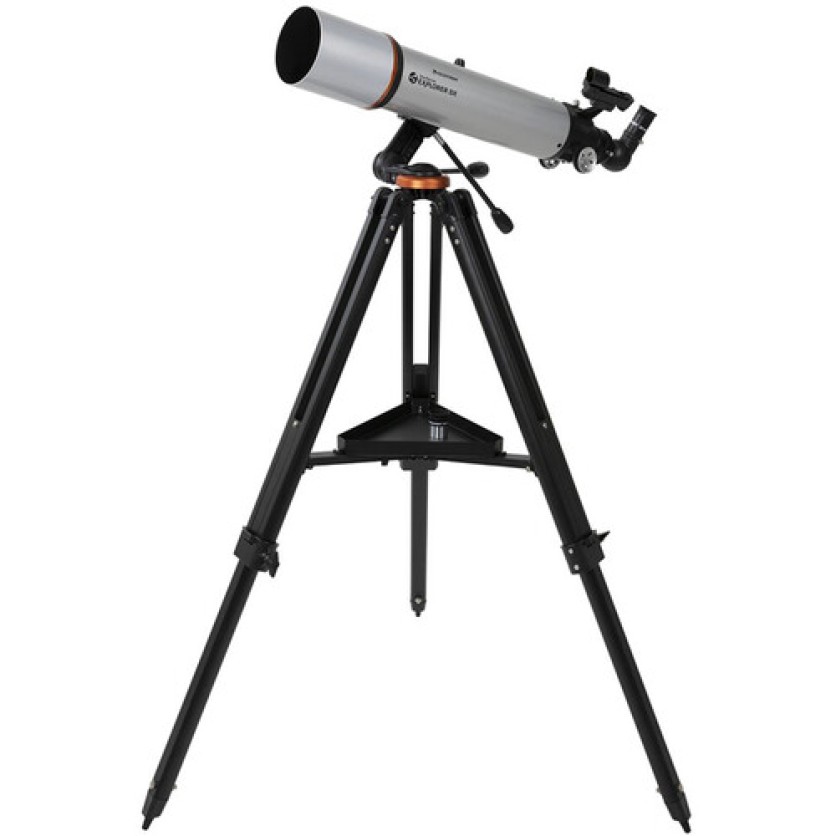
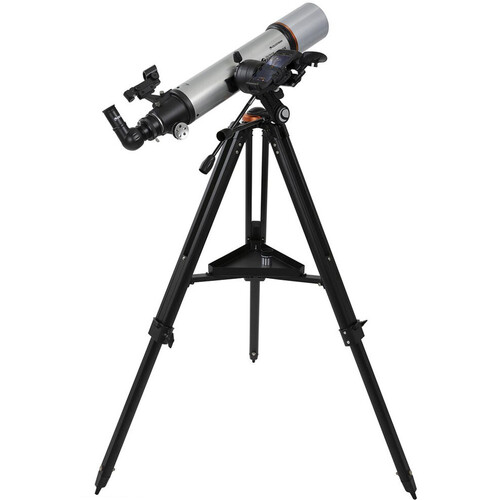
Optically, the 102mm objective lens offers clear views of the lunar surface and planetary features with the ability to reach out beyond our solar system to view bright deep-sky objects—producing accurate color representation and little field curvature at the edges of the view. Supporting the telescope and StarSense holder is a basic manual single-arm alt-azimuth mount outfitted with dual-axis slow-motion control cables that let you move the telescope quickly and easily according to the app's direction to find your object of interest, with the ability to precisely track the object when you want to view it for extended periods. A two-section aluminum tripod provides a wide adjustable height to accommodate a variety of viewing positions and users, while being highly portable for when you have to carry it to remote viewing locations.
Complete Observation Rig
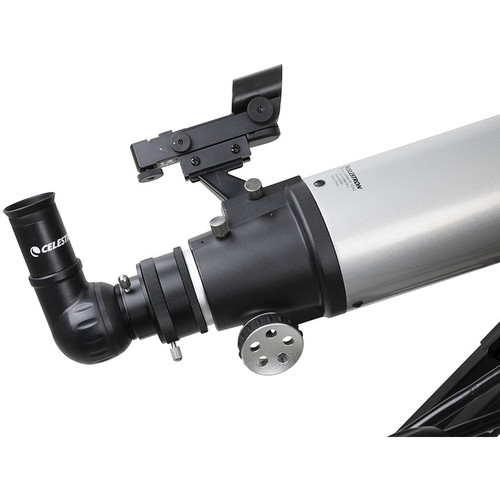
Designed as a complete observation rig, Celestron includes a variety of accessories to get you viewing right out of the box. In addition to the telescope, mount, and tripod, you also get two eyepieces that provide you with high and low magnifications, plus a 90° diagonal that not only places your head in a comfortable viewing position when the scope is pointed directly overhead but also corrects the view so you can use the telescope as a conventional spotting scope.
StarSense System
Download StarSense Explorer app from the Google Play (Android) store or App Store (iPhone)
Place an Android smartphone or iPhone in the included StarSense Explorer dock attached to, and aligned with, the optical tube
2-minute procedure to align the phone with the telescope
App generates a list of celestial objects currently visible
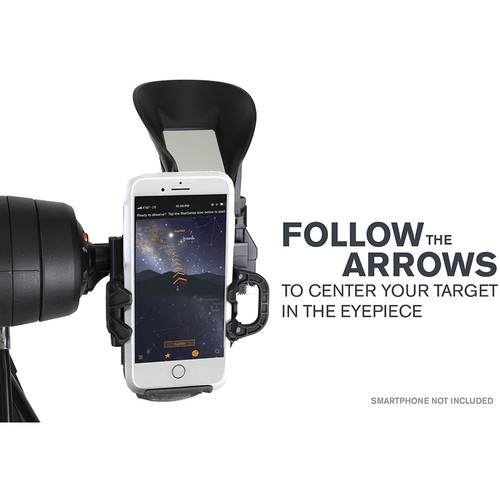
Select the object to view and arrows appear onscreen, guiding the user as they move the telescope
When the object is ready to view, the bullseye turns green
The StarSense app utilizes a "Lost in Space Algorithm" (LISA) to accurately calculate the current location and orientation by using the phone's GPS data, gyroscopic input, and camera to map the night sky and compare it to the app's database to accurately align and orient the scope and determine what is visible overhead
App is self-contained; no cell signal required for use far off the grid
Compatible Smartphones
Android 7.1.2 and higher manufactured in 2016 and later, with camera, gyro, and accelerometer
iPhone 6 and newer
Optical Tube Assembly
102mm f/6.5 aperture to view the moon, planets, constellations, and bright deep-sky objects like clusters and galaxies
650mm focal length produces a moderate magnification potential with a highly portable length and weight
Refractor design requires very little maintenance by the user or collimation over time
Anti-reflection fully coated glass optics maximize light transmission through the light path to ensure bright and clear views with improved resolution
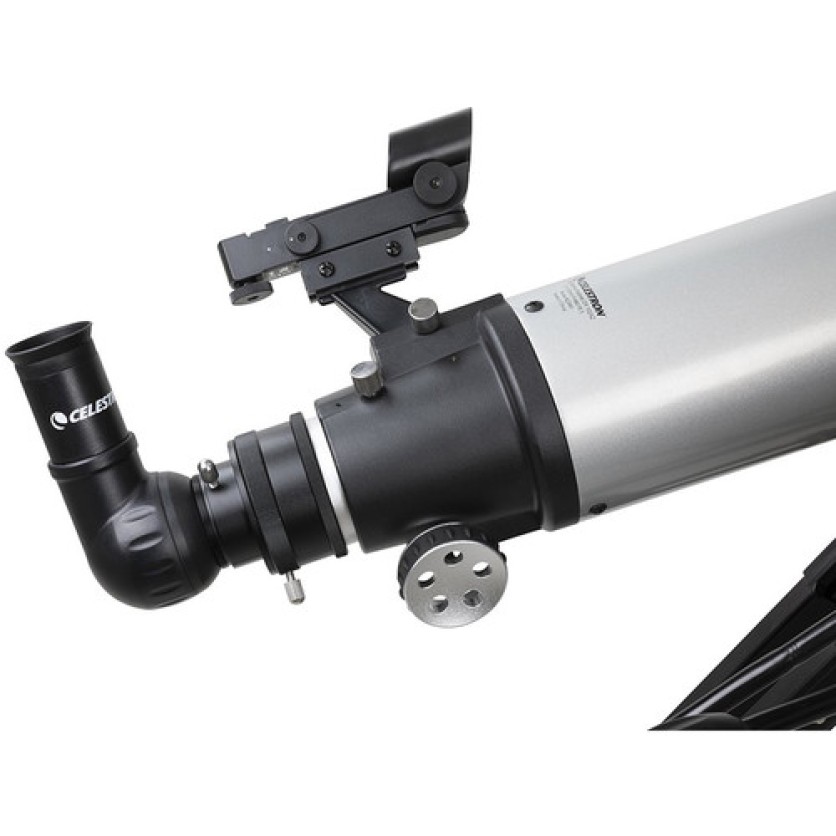
Standard 1.25" holder accepts the most common size eyepieces and accessories, including the two eyepieces in this kit
Mount and Tripod
Manual alt-azimuth mount design is simple to set up and move
Single fork-arm design reduces weight without sacrificing stability
Dual axis slow-motion control cables provide an easy way to move and precisely track objects with reduced vibration
Simple setup and breakdown with dovetail saddle
Adjustable-height aluminum tripod accommodates a variety of users and observing positions
Maximum height of 49" (124cm) including mount
Center tray holds accessories such as eyepieces and filters
Included Accessories
90° erect-image diagonal corrects view to use the telescope as a conventional spotting scope while providing a comfortable viewing angle, especially when the scope is aimed overhead
25mm eyepiece produces a low 26x power for observing the moon, planets, deep-sky objects, and constellations
10mm high-magnification eyepiece yields 66x power for detailed views of the lunar surface and planetary features
Unmagnified StarPointer finderscope places a simple red dot in the field of view to make alignment and star hopping navigation faster and easier
Specifications
Optical Design
Rowe-Ackermann Schmidt Astrograph
Aperture
152mm (5.98")
Focal Length
335mm (13.18")
Focal Ratio
f/2.2
Optical Coatings
StarBright XLT coatings throughout
Central Obstruction Diameter
63mm (2.48") (41% of aperture diameter)
Light Gathering Power (Compared to human eye)
474x
Image Resolution
1.48 arcsec/pixel
Dovetail
CG-5 Dovetail Bar
Filter Drawer
Integrated, accepts 1.25" or 2" astroimaging filters
Imaging Sensor Info
CMOS Image Sensor
Sony IMX178LQJ, color, back-illuminated
Sensor Size
8.92mm (0.35") diagonal
Pixel Size
2.4µm x 2.4µm
Number of Effective Pixels
6.44M (3096 x 2080)
Field of View
1.27° x 0.85°
Integrated Electronics Info
Onboard Computer
Raspberry Pi 4 Model B
Mount
Computerized GoTo altazimuth mount
Dew Prevention
Fully automated heating element integrated into front lens, removable dew shield/lens shade
Focus Motor
Autofocus or manual control
Cooling Fans
One (1) fan for optics, one (1) fan for electronics, both pull air through vents with wire mesh
LED Status Ring
Indicates status "at-a-glance"
Ports Info
USB-A
Two (2) on optical tube for accessing raw image files for external processing, one (1) on mount for mobile device charging only
Ethernet
One (1) on optical tube
Auxiliary Ports
Two (2) on optical tube, four (4) on mount
Power Info
Battery
Integrated LiFePO4, 97.9 Wh, capable of 6+ hours of use
Power Input
12V DC adapter for charging internal battery or running on external AC power
User Interface Info
Celestron Origin App
Runs on compatible iOS or Google Play smartphones and tablets
System Requirements
iOS 16 or higher, Android 12 or higher
Dimensions
Optical Tube
609.6mm x 177.8mm (24" x 7") diameter
Mount
457.2mm x 304.8mm x 254mm (18" x 12" x 10")
Tripod (Collapsed)
330.2mm x 304.8 x 812.8mm (13" x 12" x 32")
Assembled System
609.6mm L x 660.4mm W x 1219.2mm H (24" L x 26" W x 48" H)
Weight
Optical Tube
10.6 lb (4.8 kg)
Mount
17 lb (7.7 kg)
Tripod
14 lb (6.35 kg)
Total System
41.6 lb (18.87 kg)
Solar Warning
Never look directly at the Sun with the naked eye or with an optic (unless you have the proper solar filter). Permanent and irreversible eye damage may result.
Never use your optic to project an image of the Sun onto any surface. Internal heat build-up can damage the optic and any accessories attached to it.
Never leave your optic unsupervised. Make sure an adult who is familiar with the correct operating procedures is with your optic at all times, especially when children are present.



 In Stock